
The Mellow Abode shares practical, down-to-earth guidance on cosy home interiors and slow living for readers across the UK.
- 0123456789
- Angle Bd Abdelmoumen & rue soumaya, Résidence
- [email protected]
The Mellow Abode shares practical, down-to-earth guidance on cosy home interiors and slow living for readers across the UK.
 By Oliver Pendleton
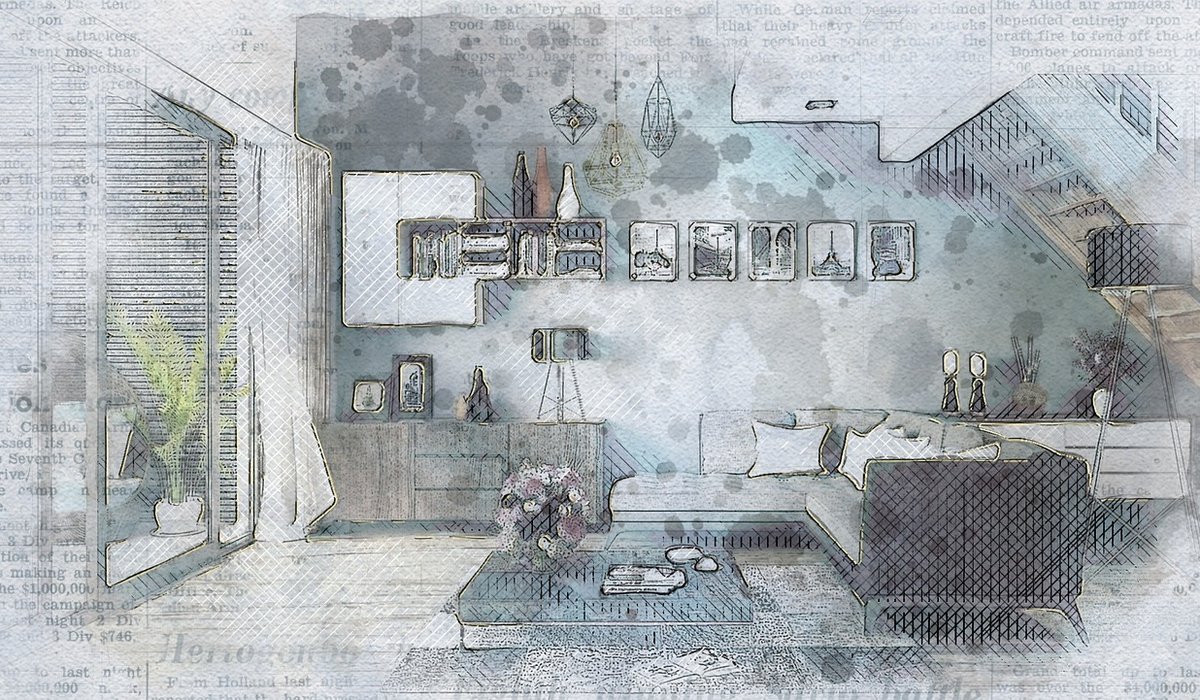
Open shelving is an honest way to live. Nothing hides behind a cupboard door, so everything on display has to earn its place. That sounds demanding, but it is also quietly liberating: when you can see what you own, you tend to own less of it, and you choose it more carefully.
The mistake most of us make is assuming that calm shelves are empty shelves. They are not. Calm comes from decision, not deprivation. A shelf holding forty objects chosen with real thought can feel far more restful than three things pushed there in a hurry. Slow living is not about owning nothing — it is about knowing why each thing is there. Open shelves simply make that visible.
Odd numbers are the quiet trick behind almost every shelf that looks effortless. Our eyes find even numbers symmetrical and slightly formal, which can read as stiff or staged. Groups of three, five or seven feel more natural, more collected over time.
Try this simple formula for a single grouping:
Three objects, three heights. Vary them so the tallest sits at the back and the smallest drifts towards the front edge. If you are styling a wider shelf, treat it as two groupings — a three and a five, for instance — rather than one long line of things.
This is where visual clutter really comes from, and it is almost never about how much you own. It is about how tightly everything is packed.
Aim for roughly a hand's width — about 8 to 10 centimetres — between groupings. Within a grouping, let items sit close enough to feel related, but far enough apart that each has its own silhouette. Leave at least a third of every shelf completely bare, and choose one shelf to leave emptier than the rest. That gap does more for the atmosphere than any object on it.
Check your vertical space too. A tall vase crammed against the shelf above feels tense; give it 5 centimetres of clear air, or move it somewhere with more headroom. Shelves should look as though things were placed, not fitted.
Books are the warmest thing you can put on a shelf, and they are also structural. They add weight and colour without asking for attention.
Stand some upright and lay others flat in horizontal stacks of three. Keep stacks to three or four books at most — beyond that they start to look like a to-do list. Mix spine heights and let the odd worn cover stay; a little imperfection keeps things human. Resist the urge to colour-code everything, which can tip a shelf from considered into showroom.
Group loosely by mood rather than alphabet: cookbooks near the kitchen, poetry in a bedroom, the ones you return to most at eye level. And do keep reading them — a shelf of books nobody touches eventually starts to feel like decoration, which is the opposite of slow.
Texture is what stops an open shelf feeling flat and cold. Ceramics and woven baskets do this beautifully, and both are practical.
With pottery, choose a loose family rather than a matching set — a speckled stoneware jug, a matte cream bowl, a glossy dark dish. Two or three glazes across a whole shelf is plenty. Mixing matte and glossy finishes adds depth without adding colour, and muted tones will always feel calmer than brights.
Baskets earn their keep by hiding the useful things: napkins, chargers, spare candles, the tangle of cables you would rather not see. Seagrass, jute and rattan all age gracefully. Again, work in odd numbers — three baskets in descending sizes looks collected, whereas two identical ones can look like a matching pair you bought in a panic. Let a little of the contents peek out at the top; a basket that is obviously doing a job feels warmer than an empty one.
Styling is not a one-off job. Shelves should shift as the seasons and your household do.
Finally, trust your shoulders. If a shelf makes you feel slightly braced every time you walk past it, something needs to come off. Take away one item, wait a week, and see. That slow, gentle editing is how shelves end up looking like a life rather than a display.


We are not gonna make spamming
