
The Mellow Abode shares practical, down-to-earth guidance on cosy home interiors and slow living for readers across the UK.
- 0123456789
- Angle Bd Abdelmoumen & rue soumaya, Résidence
- [email protected]
The Mellow Abode shares practical, down-to-earth guidance on cosy home interiors and slow living for readers across the UK.
 By Sophie Bramley
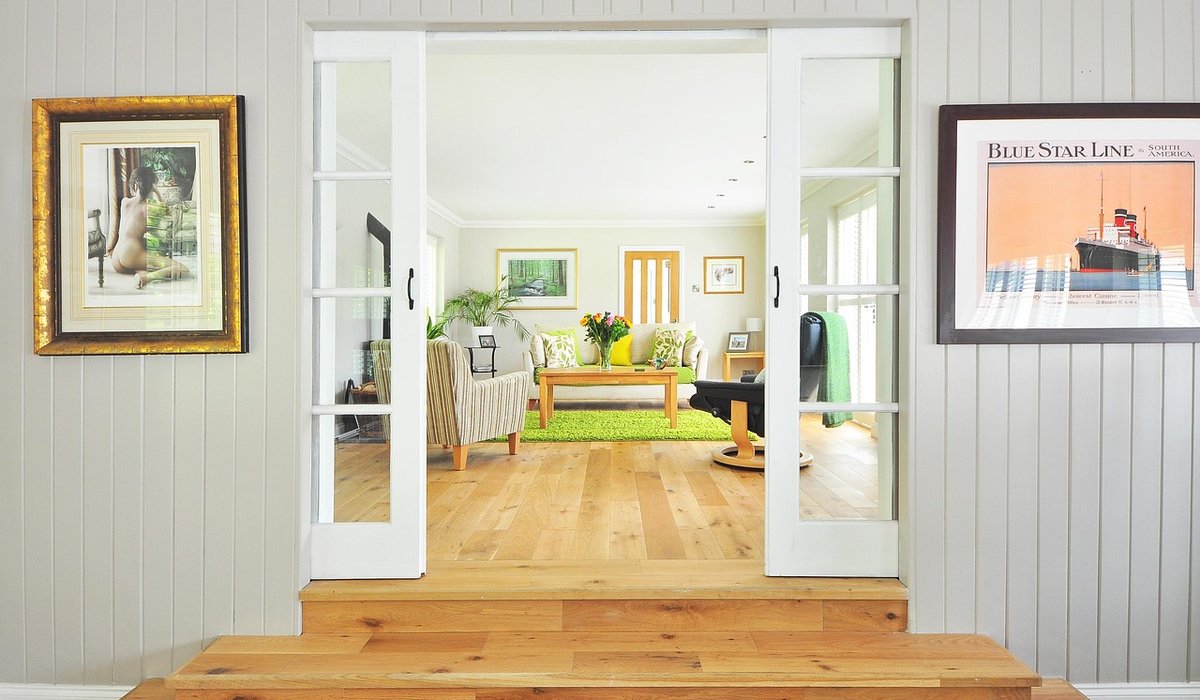
Few spaces in a home work as hard as the hallway, and few are asked to do so with so little room. It is the place where coats are shrugged off, shoes are kicked into corners and keys are dropped wherever a surface happens to be. By the time you leave in the morning, a hallway that has quietly collected clutter all week can turn a calm departure into a frantic search for a missing glove.
Slow living is not about doing everything at half speed. It is about removing the small frictions that make ordinary moments feel rushed. A hallway that works properly gives you back a few minutes each day, and those minutes add up to something that feels remarkably like calm.
A bench is the anchor of a well-organised hallway, but only if it fits. Look for something around 30 to 35 centimetres deep and no wider than the wall allows, with a seat height of roughly 45 centimetres. Slim benches are widely available in oak, painted pine or woven rattan, and a shallow one will not block a narrow passage the way a console table often does.
What matters is that the bench has a job. Sitting down to put on shoes is far kinder to your back than balancing on one leg, and it gives children a place to manage their own coats and bags. If your bench has space underneath, use it deliberately:
If your hallway is genuinely too narrow for a bench, a folding stool tucked beside the door does the same work and disappears when it is not needed.
Hooks are where hallways either succeed or descend into a tangle of straps and sleeves. The usual mistake is fitting too few of them, too high up, so that everything ends up piled on one. A practical arrangement uses a mix of heights. Adult hooks sit around 170 centimetres from the floor, while a lower row at roughly 105 centimetres lets children reach their own things without help.
Think about how many hooks you actually need. A useful rule is two per person: one for an everyday coat, one for a bag or scarf. Anything beyond that belongs in a wardrobe, not on display. Double hooks, which project a little further from the wall, hold more without taking up more width, and a small labelled tag above each pair ends the daily squabble over whose hook is whose.
Choose hooks with a rounded end rather than a sharp point, particularly in a narrow space, and fix them into a batten or solid wall so they can carry the weight of a wet winter coat without sagging.
The kitchen worktop and the hallway floor are where keys go to disappear. A shallow tray solves this neatly. Aim for something two to three centimetres deep and roughly the size of a paperback, placed on the bench or on a narrow shelf at hip height. A deeper bowl simply becomes a place to hide things you will forget about.
Keep the tray's contents strict: keys, a spare hair band, a folded receipt you will deal with tonight. Add a small pot beside it if you like, but resist the urge to let it fill with coins, hair grips and old till receipts. Empty the tray once a week, and it will stay useful rather than becoming another surface to tidy.
A hallway can only hold what it is asked to hold, and the honest answer is that it should hold very little. Treat what lives by the door as a working set rather than a collection. Each person gets one pair of everyday shoes out, and the rest go into a bedroom or a cupboard.
Bags follow the same logic. A single hook or basket for the bag you actually carry, emptied of anything that does not need to travel with you tomorrow, makes the morning routine noticeably quicker. A small basket for reusable shopping bags and one for outgoing post are the only extras most hallways need.
Once a season, take everything out. Wash the boot tray, wipe the bench, and ask whether each item has been used in the last few months. Things that have not can go to charity, into storage or back to their rightful room.
An organised hallway stays organised through habit rather than willpower. A two-minute reset before bed, during which coats are hung and the tray is emptied, is enough to keep the space in order. Pair it with something pleasant, such as lighting a small lamp on the bench, and it becomes a moment you look forward to rather than a chore.
Keep the surfaces mostly clear, choose natural materials in warm neutrals, and let a single object, a candle, a small vase or a framed print, do the decorative work. A hallway that is quiet, tidy and ready for you each morning will send you out of the door feeling steady, and welcome you home in the same frame of mind.


We are not gonna make spamming
